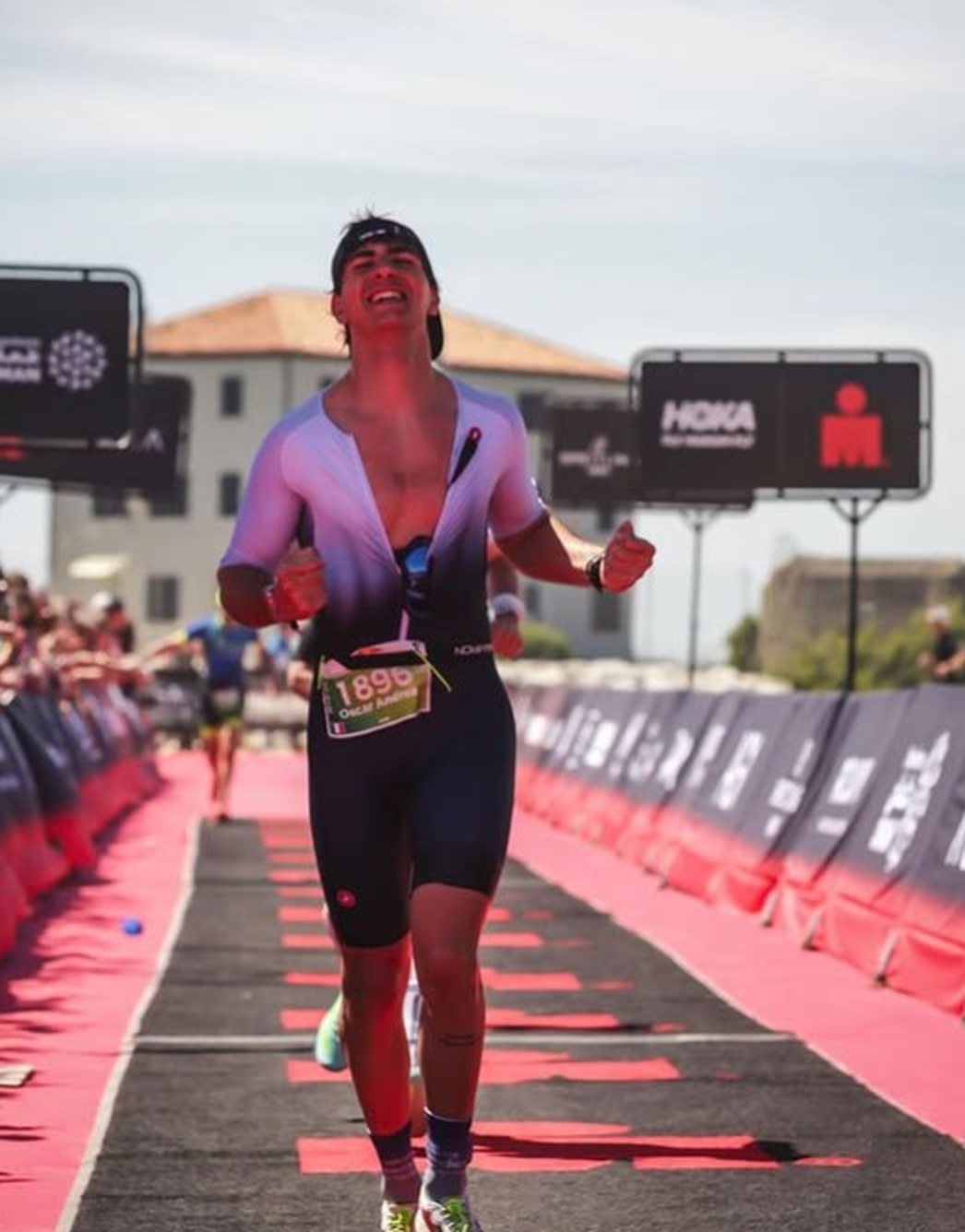
Oscar Andrea Sette
From Recreational Fitness to Endurance Performance
Grow slowly, win big.
A journey of athletic development, discipline and resilience. From a recreational gym enthusiast with no competitive endurance background to an IRONMAN 70.3 finisher, through structured training, progressive adaptation and comprehensive multidisciplinary coaching.
- Discipline
- Marathon, Half Marathon & Triathlon
- Coaching since
- July 2023
- Coach
- Mattia Mugnaini
- Coaching model
- Integrated Athlete Development
Reduction in marathon finishing time between Amsterdam 2023 and Prague 2024.
Marathon improvement over 203 days.
Wizz Air Rome Half Marathon 2024.
Venice-Jesolo 2026.
The Starting Point
When Oscar Andrea Sette began working with Mattia Mugnaini in July 2023, he was a university student living in Amsterdam.
His sporting background consisted primarily of recreational gym training approximately three times per week, without structured endurance preparation or competitive objectives.
The initial challenge was to prepare for his first marathon within a limited timeframe, with the objective of completing the race in under four hours and thirty minutes.
On 15 October 2023, Oscar completed the Amsterdam Marathon in 4:18:01, exceeding the initial target by 11:59.
This achievement established the foundation for a longer-term athlete development project, progressively expanding from marathon running into multidisciplinary endurance performance.
From recreational training to completing a first marathon in approximately three months of structured coaching.
From the first start line to Venice-Jesolo
- July 2023
Beginning of the coaching journey
Initial transition from recreational gym training to structured endurance preparation.
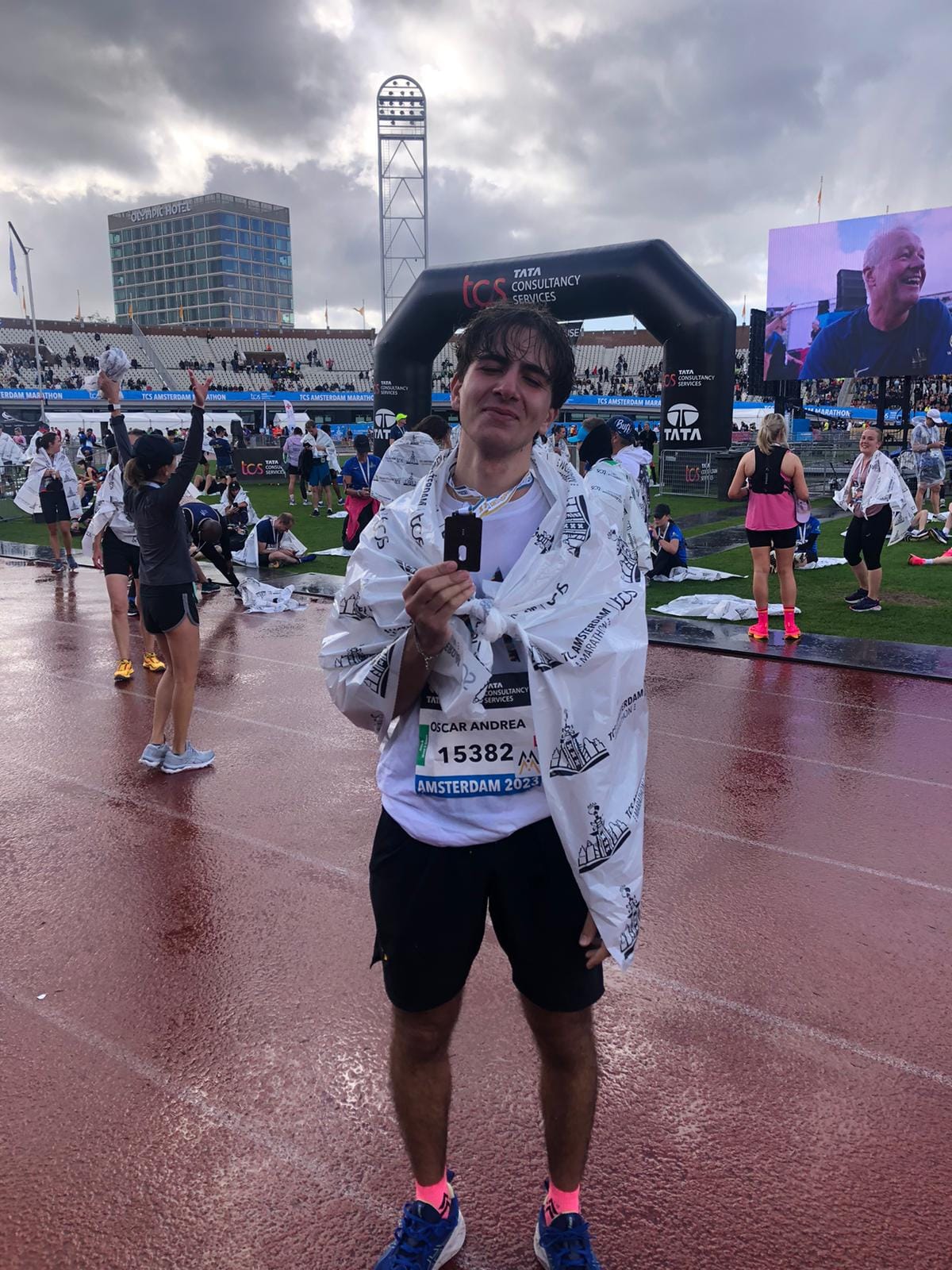
- 15 October 2023
Amsterdam Marathon
- Distance
- 42.195 km
- Finishing time
- 4:18:01
- Average pace
- 6:07/km
- Initial target
- Sub-4:30
- Target exceeded by
- 11:59
First marathon completed.
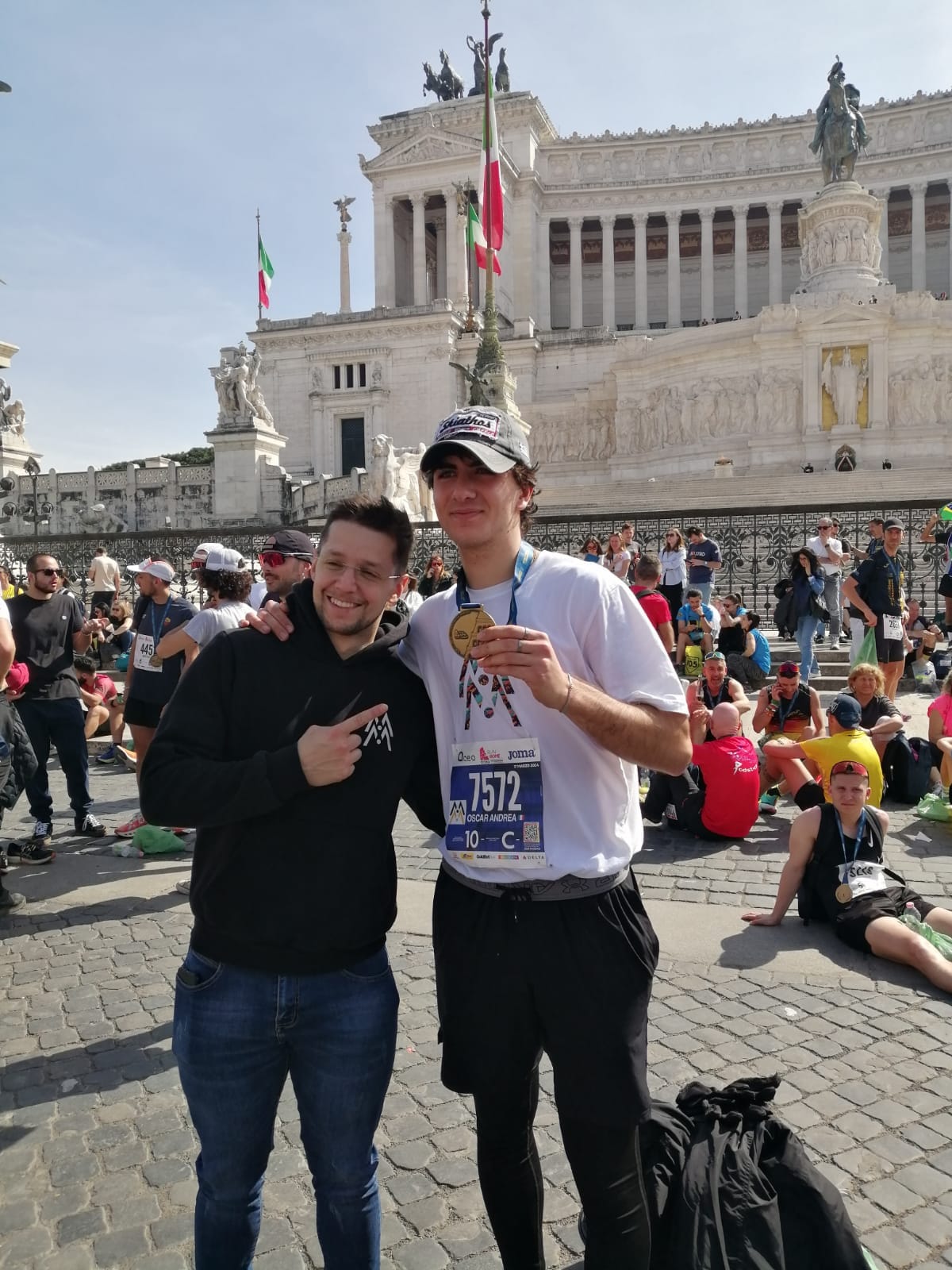
- 17 March 2024
Rome Marathon
- Distance
- 42.195 km
- Finishing time
- 4:08:20
- Average pace
- 5:53/km
- Improvement from Amsterdam
- 9:41
- Relative time reduction
- 3.75%
Continued development of endurance performance.
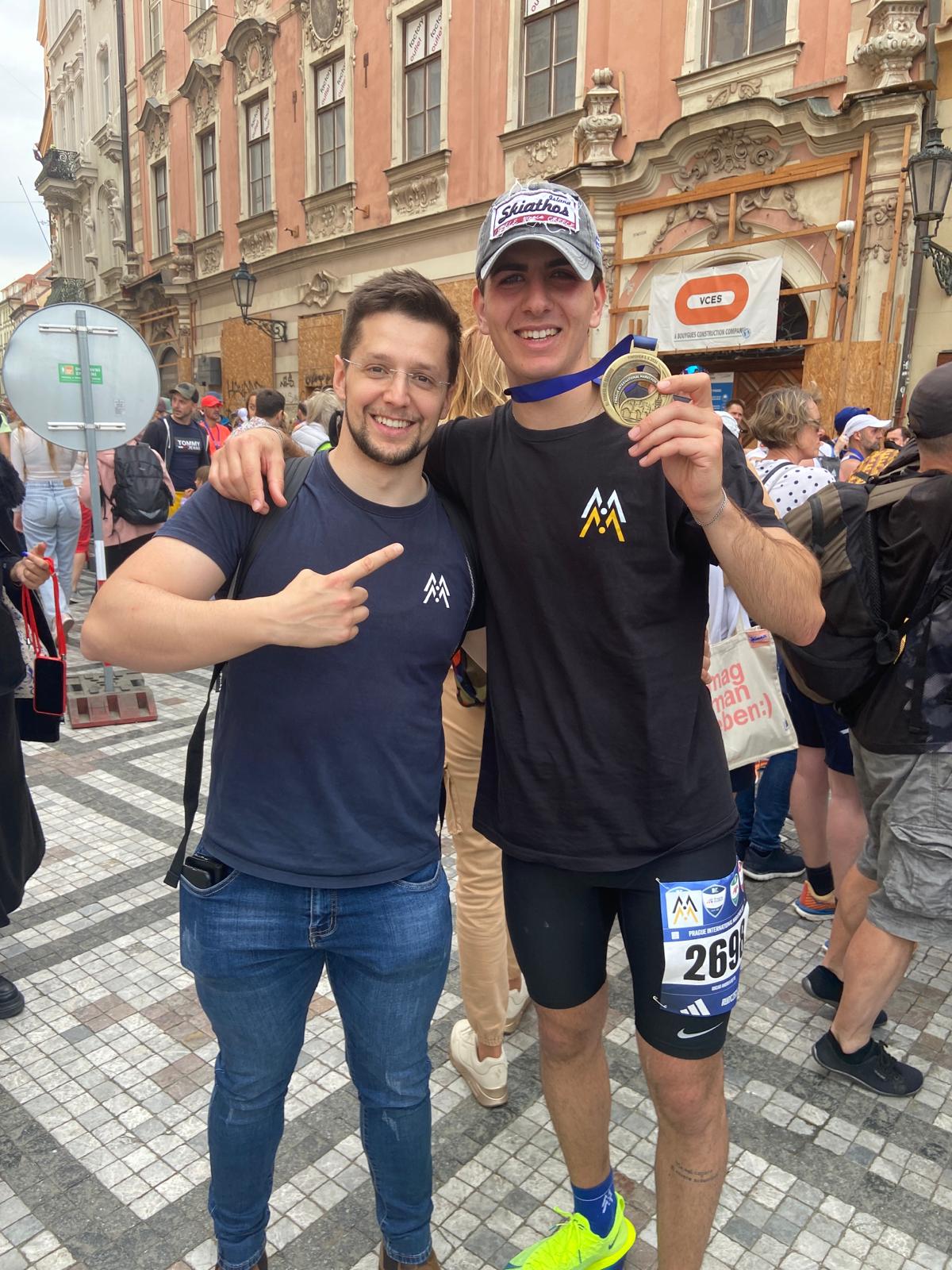
- 5 May 2024
Prague Marathon
- Distance
- 42.195 km
- Finishing time
- 3:45:57
- Average pace
- 5:21/km
- Improvement from Rome
- 22:23
- Improvement from Amsterdam
- 32:04
- Overall time reduction
- 12.43%
Finishing time as recorded in the Czech athletics results archive.
- 20 October 2024
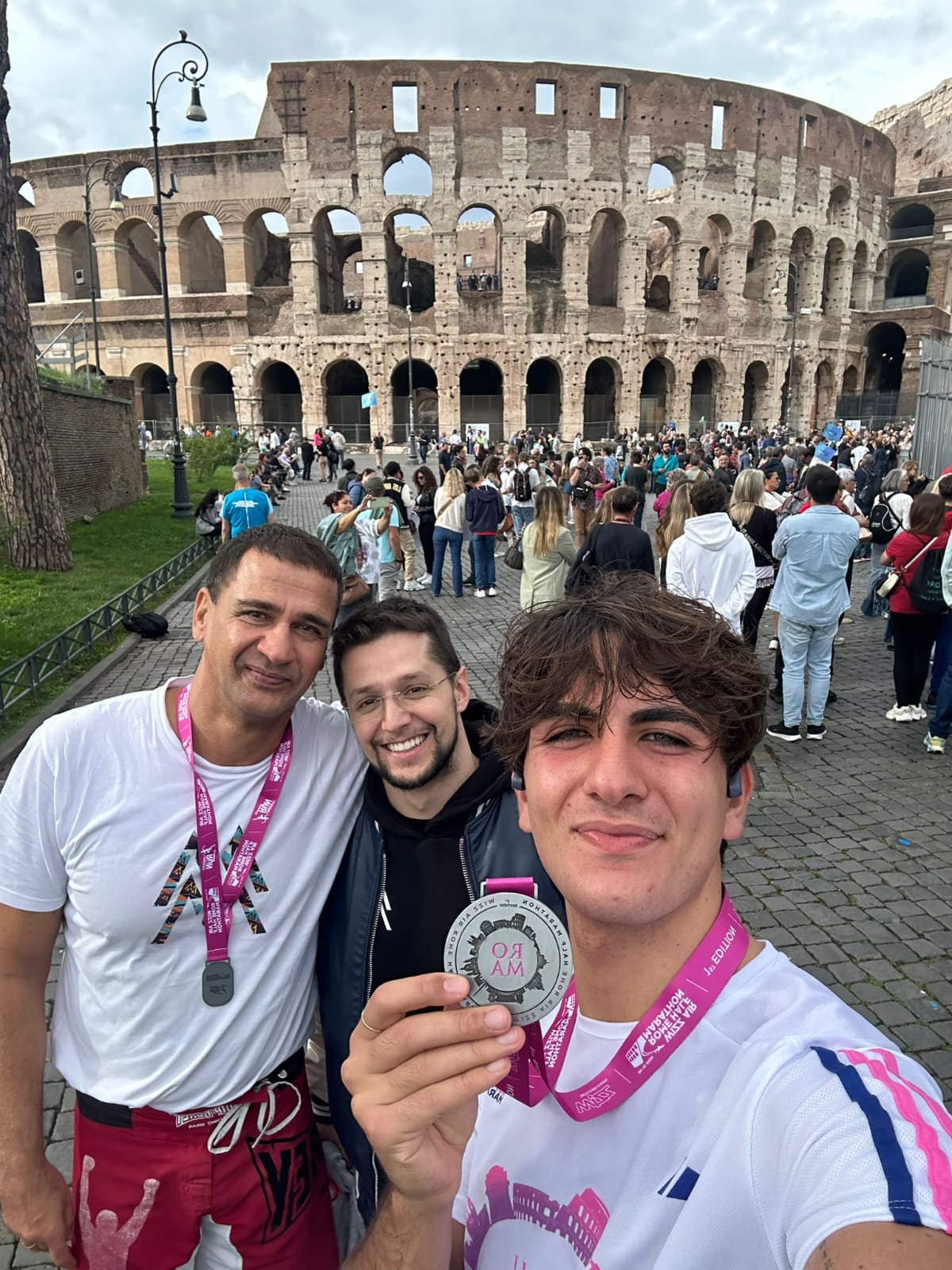
Wizz Air Rome Half Marathon
- Distance
- 21.0975 km
- Finishing time
- 1:38:10
- Average pace
- 4:39/km
- Category position
- 16th
Category position as reported in the coach's race documentation.
- 2025
IRONMAN 70.3 Venice-Jesolo
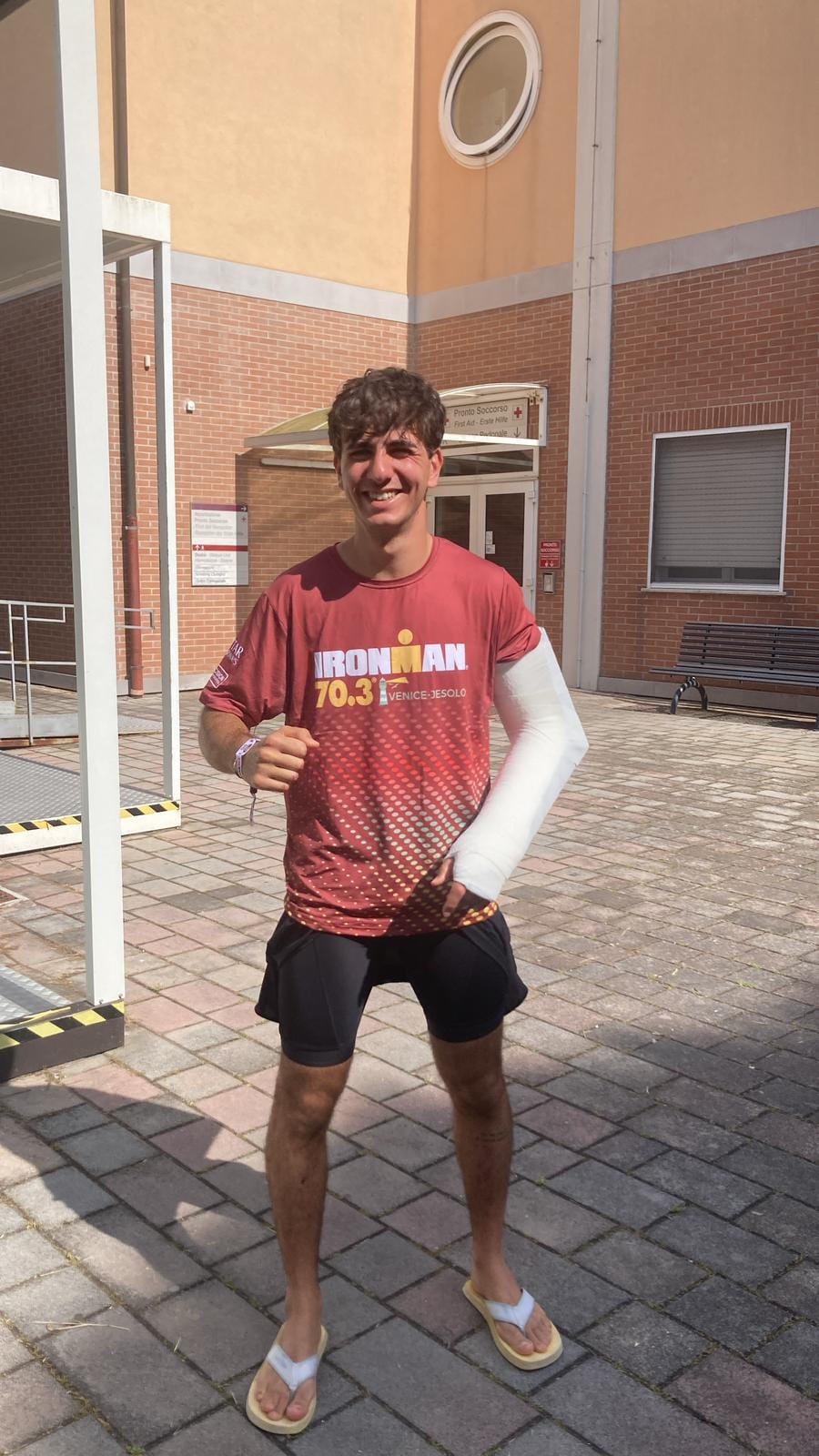
Injury before the race startA cycling accident immediately before the competition resulted in an arm fracture, interrupting the planned participation. The training programme was subsequently adapted to support recovery and a gradual return to sporting activity, in collaboration with healthcare professionals.
- 2026
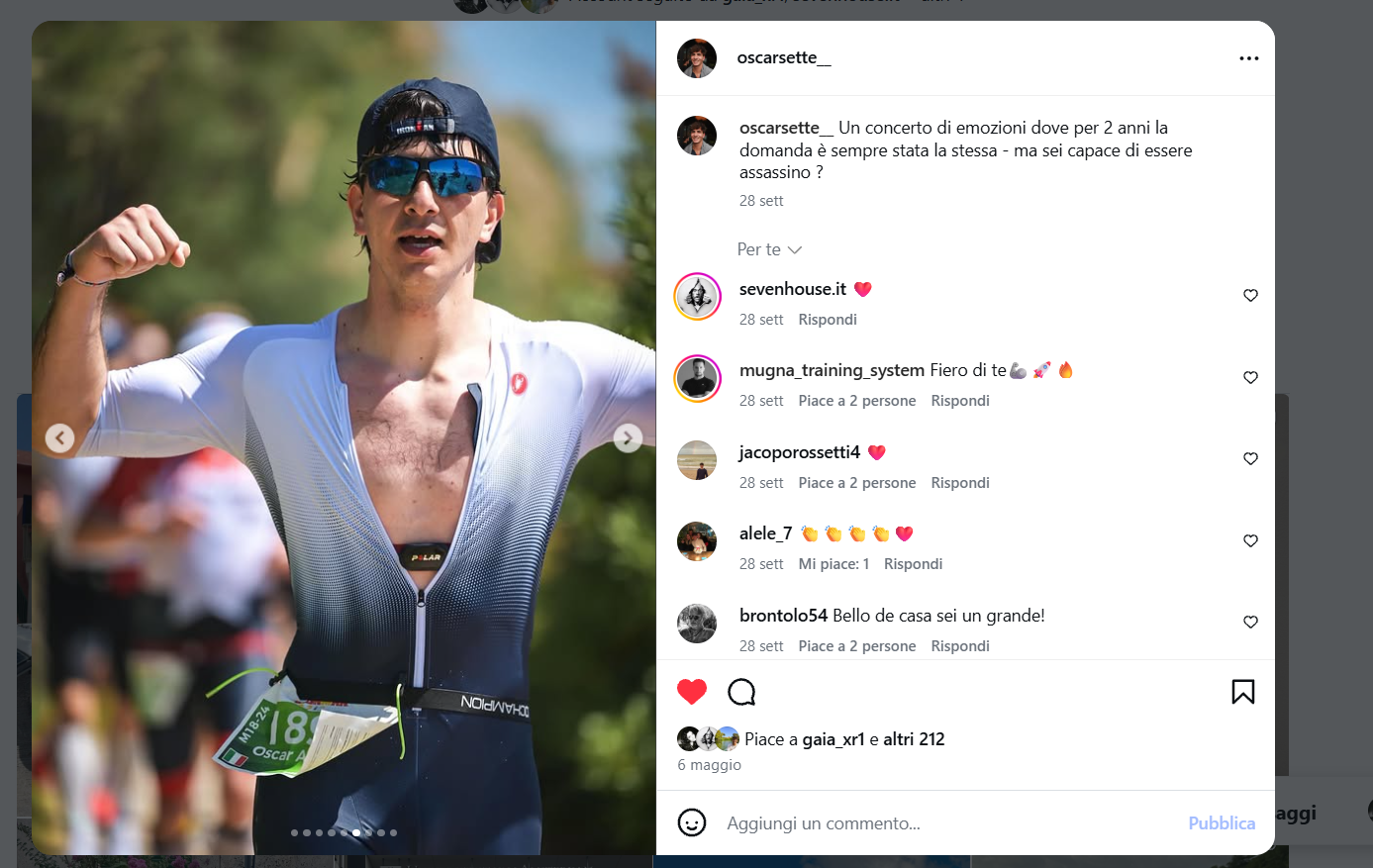
IRONMAN 70.3 Venice-Jesolo
- Total finishing time
- 5:06:12
- Total nominal distance
- 113 km
- Age-group category
- M18–24
- Category ranking
- 39th
- Overall ranking
- 787th
Completion of the multidisciplinary endurance challenge following the previous year's setback. Rankings as listed in the available race-results archive.
Performance Through Data
Measurable progress across a long-term athlete development pathway.
Marathon Performance Progression
Finishing time by race date. Lower is faster.
| Marathon finishing time | 15 Oct 2023 | 4:18 |
| Marathon finishing time | 17 Mar 2024 | 4:08 |
| Marathon finishing time | 5 May 2024 | 3:46 |
Overall improvement: −32:04 (−12.43%) in 203 days.
Marathon Average Pace
Average pace per kilometre. A shorter bar is a faster pace.
Overall improvement: approximately 46 seconds per kilometre.
Relative Marathon Improvement
Cumulative time reduction, with Amsterdam 2023 as the reference baseline.
Reference baseline
Race-to-race: 3.75% vs the previous marathon
Race-to-race: 9.01% vs the previous marathon · Largest recorded improvement
Cumulative values compare each race with Amsterdam 2023. Race-to-race values compare each race with the one immediately before it.
Half Marathon Performance Comparison
Standalone half marathon and the running segment of IRONMAN 70.3.
- 4:39/km
- Standalone half marathon pace
- ≈ 4:56/km
- Triathlon running pace
- 5:56
- Absolute time difference
- 6.04%
- Relative time difference
The athlete completed the running segment of IRONMAN 70.3 approximately six minutes slower than his previously recorded standalone half marathon, after completing 1.9 km of swimming and 90 km of cycling.
This comparison provides descriptive evidence of endurance performance across different competitive contexts.
It is not an isolated measurement of physiological improvement or fatigue resistance: the two competitions took place in different years and under different environmental and competitive conditions.
Multisport Performance Breakdown
| Discipline | Distance | Time | Average performance | Share of race time |
|---|---|---|---|---|
| Swimming | 1.9 km | 32:12 | 1:42/100 m | 10.52% |
| Cycling | 90 km | 2:40:36 | 33.62 km/h | 52.45% |
| Running | 21.0975 km | 1:44:06 | 4:56/km | 34.00% |
| Combined transition residual | — | 9:18 | — | 3.04% |
| Total | Approximately 113 km | 5:06:12 | — | 100% |
- 10.52%Swimming32:12
- 52.45%Cycling2:40:36
- 34.00%Running1:44:06
- 3.04%Combined transition residual9:18
The combined transition residual is calculated by subtracting the three discipline times from the total finishing time. Individual T1 and T2 times are not available and are not estimated.
Calculation Methodology
Every figure on this page is calculated from the original race times in seconds, never from rounded display values.
Relative finishing time reduction
Absolute time improvement
Result1924 seconds, i.e. 32 minutes and 4 seconds.
Average running pace
Displayed in minutes and seconds per kilometre.
Average speed
ResultAmsterdam: approximately 9.81 km/h. Prague: approximately 11.20 km/h.
Relative average speed improvement
For equal race distances this is calculated directly from the unrounded finishing times.
ResultApproximately 14.19%.
Relative half marathon time difference
Multisport time distribution
All shares are calculated dynamically from the original dataset.
One Athlete. One Integrated Performance Strategy.
Unlike coaching models that focus exclusively on one discipline, Oscar's development pathway involves comprehensive coordination of multiple training components.
Swimming
Development of swimming technique, endurance preparation and race-specific training for triathlon competition.
Cycling
Progressive cycling preparation, endurance development and race-specific workload management.
Running
Structured preparation for marathon, half marathon and triathlon running demands.
Strength & Conditioning
Physical preparation supporting the demands of endurance and multisport competition, including strength development, movement quality and training-load tolerance.
Recovery & Multidisciplinary Collaboration
Training adaptation and return-to-sport programming in collaboration with physiotherapists, osteopaths and medical professionals when required. Medical diagnosis, treatment and clinical clearance remain the responsibility of qualified healthcare professionals.
Mattia Mugnaini is responsible for the integrated sporting programme, including swimming, cycling, running and physical preparation, while coordinating with relevant healthcare professionals when necessary.
The Setback Was Not the End
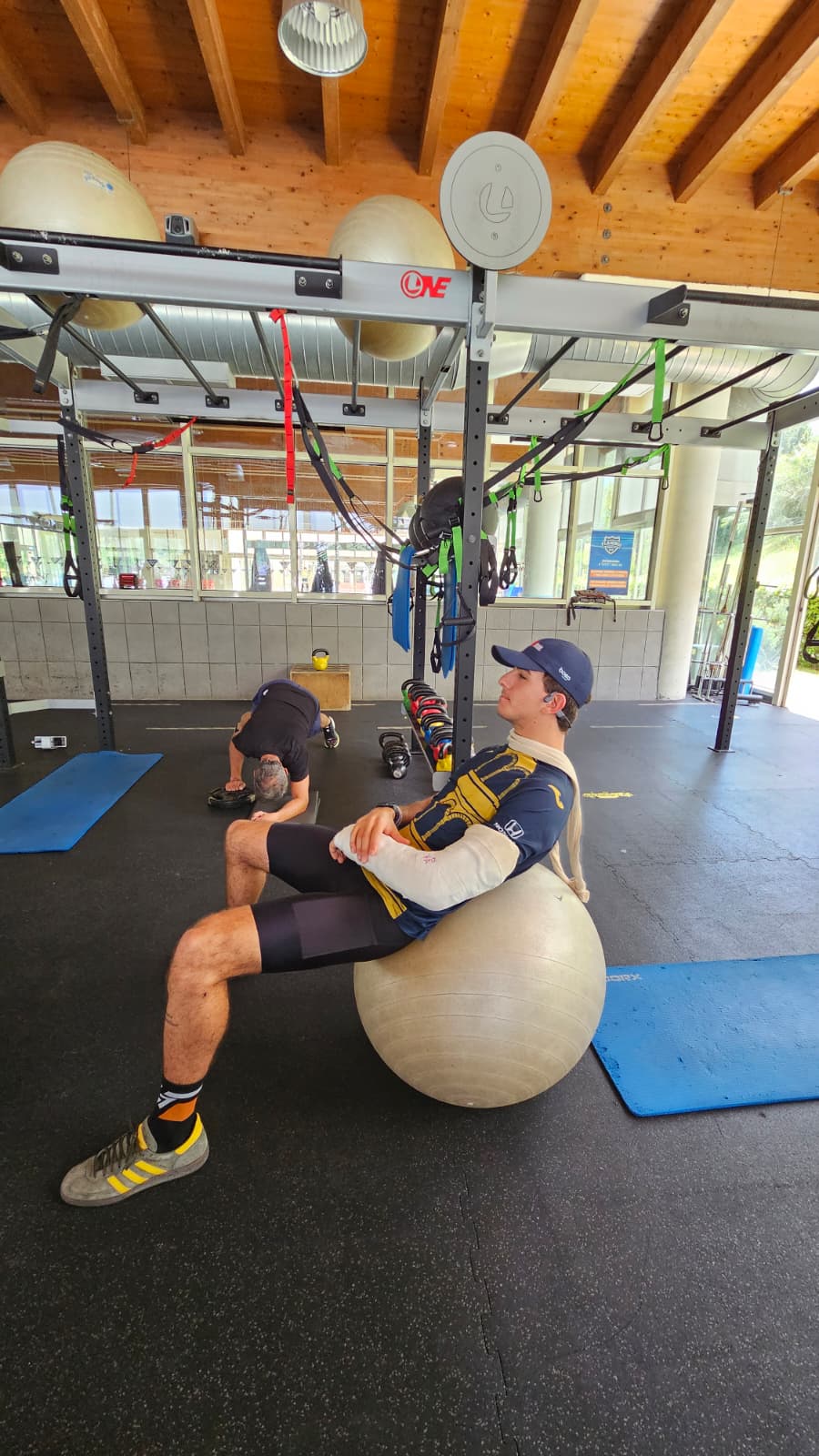
The 2025 IRONMAN 70.3 Venice-Jesolo represented a major milestone in Oscar's transition towards multisport competition.
However, a cycling accident immediately before the event resulted in an arm fracture and prevented him from competing.
Rather than abandoning the long-term objective, the preparation pathway was adapted to the athlete's circumstances, with recovery and progressive training resumption supported by multidisciplinary collaboration.
In 2026, Oscar returned to Venice-Jesolo and completed IRONMAN 70.3 in 5:06:12.
The achievement represents not only a sporting milestone but also the importance of continuity, adaptability and commitment within long-term athlete development.
Race by Race
Building an Athlete, Not Just a Race Result
Oscar Andrea Sette's development pathway demonstrates how structured coaching can support the transition from recreational physical activity to increasingly demanding endurance and multisport objectives.
Between October 2023 and May 2024, his recorded marathon finishing time decreased by 12.43%, representing an improvement of more than 32 minutes.
The subsequent completion of IRONMAN 70.3 expanded this development beyond running into a multidisciplinary competitive environment.
The case illustrates the value of individualized programming, progressive training adaptation, multidisciplinary coordination and long-term consistency.
The results reflect the athlete's commitment and the integrated coaching process. They should not be interpreted as evidence that coaching alone caused every observed performance improvement.
Data Sources & Methodological Notes
- Amsterdam Marathon 2023
- Athlete's engraved finisher medal and coach's photographic documentation.
- Rome Marathon 2024
- Finishing time supplied by the coach.
- Prague Marathon 2024
- Czech athletics results archive.
- Rome Half Marathon 2024
- Coach's contemporaneous race documentation.
- IRONMAN 70.3 Venice-Jesolo 2026
- Available race-results archives, including CoachCox and UNPACE.
- Coaching background and training methodology
- Information supplied directly by Mattia Mugnaini.
Coach-reported results and independent race archives are not organiser-certified official results. Where a verified official organiser result becomes available, it replaces the value shown here after approval by the site owner.
- This is an individual longitudinal observational case study.
- Race conditions, course profiles, weather and competitive circumstances may differ between events.
- Timing conventions may differ between events.
- No VO2max, lactate threshold, FTP, heart-rate or laboratory measurements have been supplied, and none are shown.
- Performance improvements are descriptive and calculated from the available race results. No exclusive causal attribution is claimed.
Every Athlete Starts Somewhere.
Performance is built through structure, consistency and a strategy designed around the individual. Whether your objective is completing your first marathon or preparing for a demanding multisport competition, the development process starts with understanding your needs.